Cubistic Prague
City Centre
(Audio Tour)


What to expect?
You will set off on a journey following the trail of Cubist and Rondocubist architecture in Prague’s city center and its surrounding areas.
Route Length: 5.5 km (+ 2 km by tram)
Time: 2–3 hours of "angular" fun
Number of Stops: 26
Audio Information: 38 minutes
A detailed map will guide you through the trip; you won’t get lost and you’ll always know exactly where to go next. At every stop, the audio guide will tell you everything you need to know about the building, and you’ll also find some photos and other interesting details.


Start and Finish
This guided audio tour begins near Výtoň and ends at the House at the Black Madonna, just a short walk from Old Town Square. As a reward, you can treat yourself to a "Cubist věneček" (a traditional cream pastry) at Grand Cafe Orient—the only Cubist café in the world. You should also take the opportunity to visit the Museum of Czech Cubism located right inside the building.

Cubism was born in France (1906–1909) through the work of painters Pablo Picasso and Georges Braque. Cubists revolutionised art by breaking down objects into geometric shapes—particularly cubes (Latin: cubus)—which they then reassembled into a single image using their imagination. While Cubism remained strictly a movement in the fine arts elsewhere in the world, we were the only ones to translate it into architecture, furniture design, and applied arts.

After the creation of Czechoslovakia, architects (primarily Josef Gočár and Pavel Janák) sought to define a new national identity. They found inspiration in Slavic folklore, which led to the birth of Rondocubism.
What else was Rondocubism called?
It was known as Czech Art Deco, the Czech National Style, National or Arched Decorativism, Arched Cubism, or even the "Sausage Style" (buřtíkový styl)—named after the decorative half-circles on the facades that look like little sausages stuck to the walls.
Instead of the radical, colorless angles, squares, and triangles of the previous era, post-war Rondocubism brought color, joy, circles, and semicircles. It is cheerful, folkloric, and vibrant (most often using red and white, the colors of our original two-toned national flag). Janák wanted architecture to evoke emotion in people, and I personally can’t help but smile whenever I see Rondocubism. The public embraced it as well, and it was built from Aš all the way to Subcarpathian Rus, where Jindřich Freiwald constructed an entire Rondocubist colony.
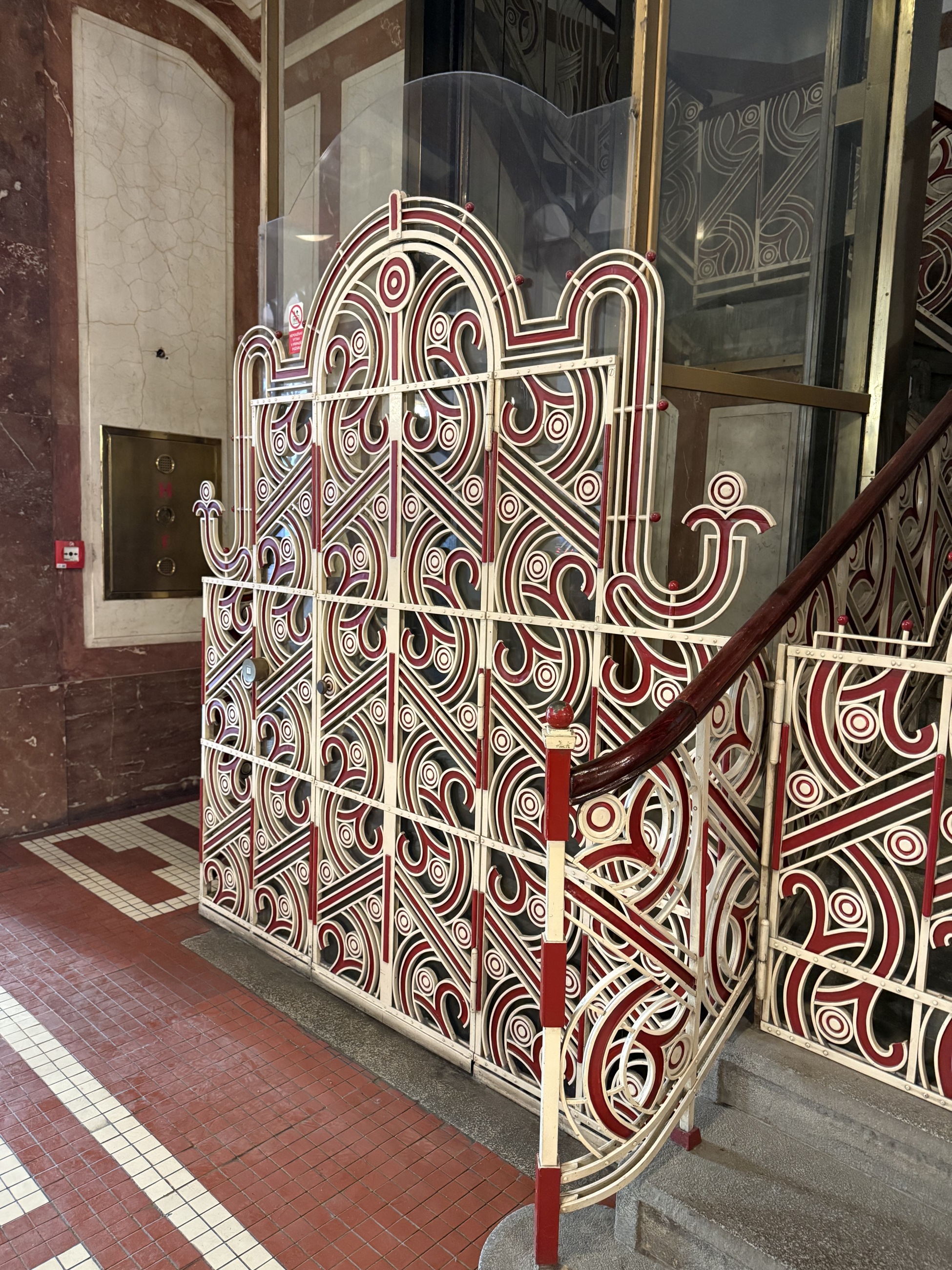
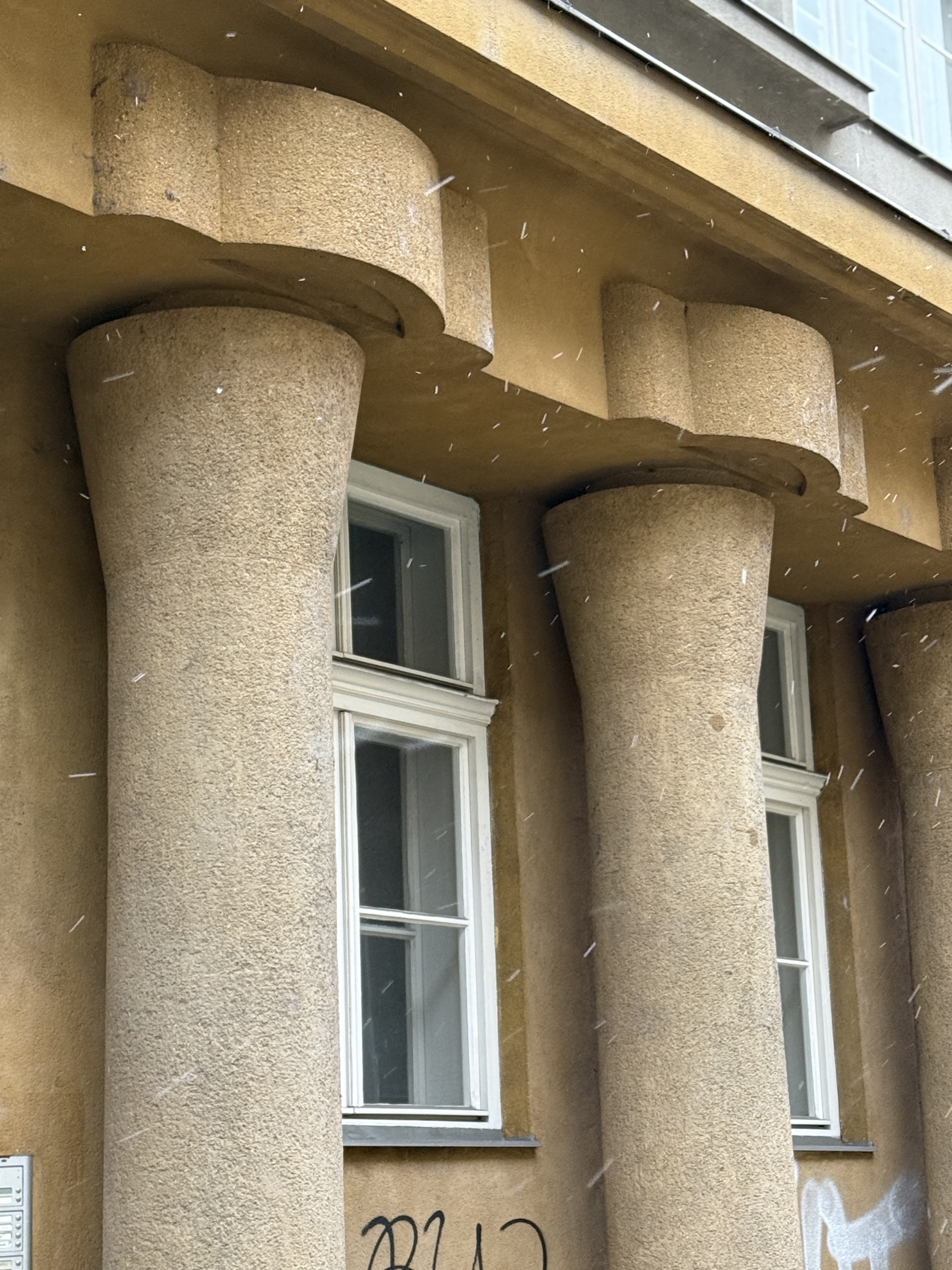
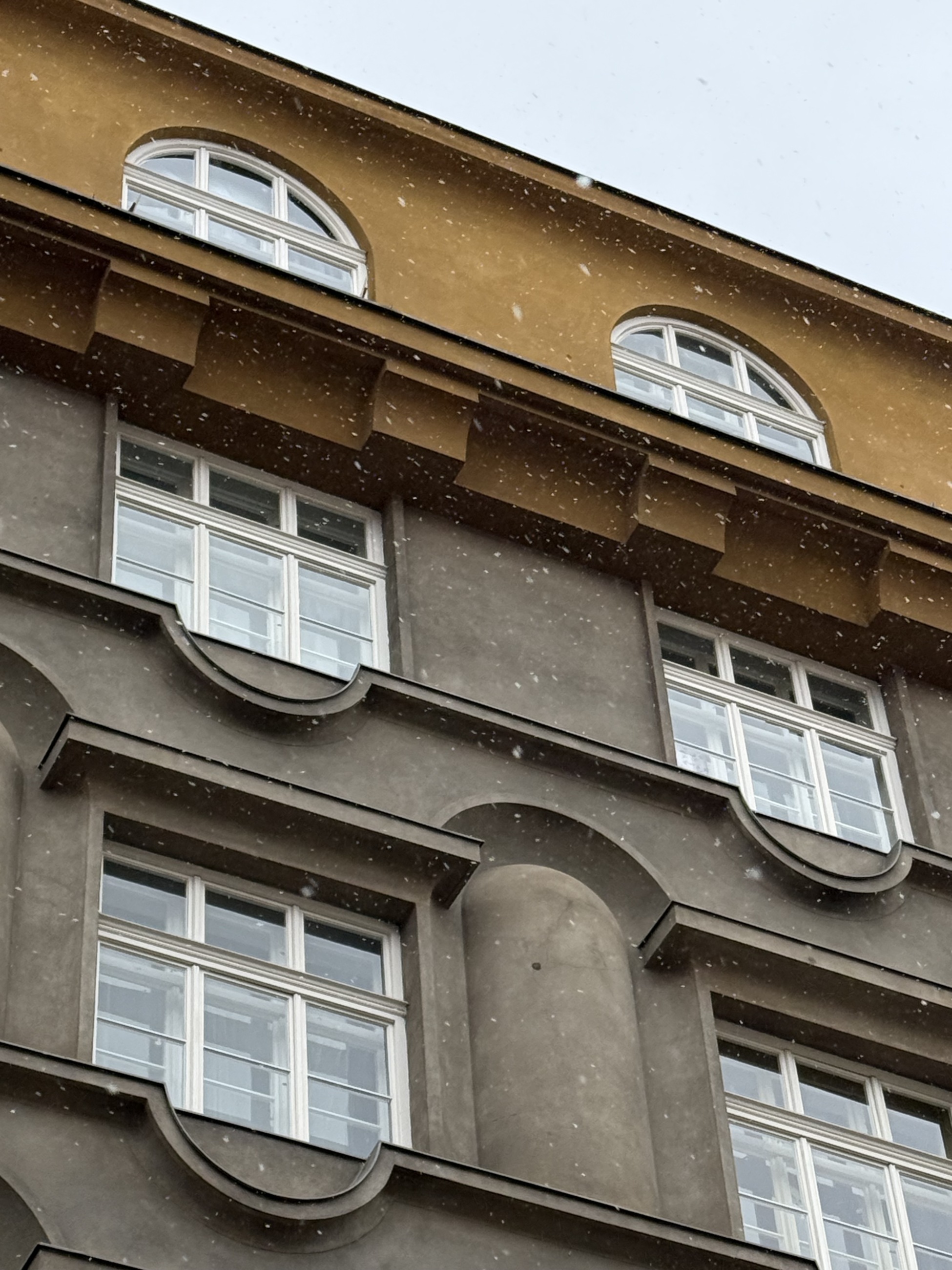
The geometric elements of Cubism remained, but the overall structures aimed to evoke various historical architectural styles. For instance, the Adria Palace from 1924 uses geometric forms to pretend it is a Venetian Renaissance palace. Similarly, Kozák’s Banking Authority building looks at first glance like a Neoclassical palace.
You will see both on this walk. You’ll explore a total of 26 buildings in both styles and learn about the life stories of the Cubist architects, as well as the history behind these significant structures. Today, tourists from all over the world travel to Prague specifically to see these Cubist houses. You, however, will set off at your own pace with only me in your ears—because I am an "Audioturistka," and soon, you will be too.
